Relocating to Blue Ash Ohio for Work: Housing & Commute Guide
March 5, 2026
March 5, 2026
Starting a new role in Blue Ash and trying to sort out where to live and how you’ll get to work? You’re not alone. This city blends a major office hub with short, predictable commutes and a wide range of housing, which makes it a smart landing spot for transferees. In this guide, you’ll get a clear picture of commute options, typical travel times, and housing choices so you can move with confidence. Let’s dive in.
Blue Ash is the largest suburban office market in Greater Cincinnati and the city reports it is home to over 2,500 companies. That scale is a key reason so many employees relocate here for work. You can see the city’s snapshot on the official site and business pages that highlight the corporate base and connectivity (city overview).
Local economic development lists a diverse set of major employers, including Ethicon (Johnson & Johnson MedTech), Kroger, Charter Communications, Belcan, Integrity Express Logistics, LSI, Schlage (Steelcraft), Baxters North American, Procter & Gamble, and Cincinnati Eye Institute. That variety supports opportunities across healthcare, consumer goods, IT, engineering, and logistics (largest employers).
A big reason companies pick Blue Ash is access. The area ties directly into I‑71, I‑275, and SR‑126, which lets employees reach downtown Cincinnati or other suburbs with relative ease (accessible location). If your office is in Blue Ash, you can often live nearby and keep your daily drive short.
Blue Ash sits about 12 miles northeast of downtown Cincinnati. The city’s business pages commonly reference a roughly 20‑minute off‑peak drive to the central business district, and about 30 to 35 minutes to CVG airport. Actual times vary by time of day, but these estimates are a useful baseline while you compare neighborhoods (transportation overview).
The American Community Survey reports a mean one‑way travel time of about 20.2 minutes for Blue Ash residents, which lines up with the local experience of short trips for many workers (Census QuickFacts).
If you prefer bus service, Metro operates fixed routes that serve Blue Ash and connect to nearby job centers. Examples include routes that cover Blue Ash, Kenwood, and Montgomery with links to downtown Cincinnati. Schedules vary by time and day, so check the latest timetables for your exact stop and work hours (Metro fixed‑route schedules).
MetroNow! offers on‑demand service zones, including a Blue Ash/Montgomery zone, that help bridge gaps where fixed routes are limited. Rides are published at $2.50 per trip and operate during daytime and evening windows. It can be a practical first‑/last‑mile option if you live close to a zone or do not want to drive daily (MetroNow! overview).
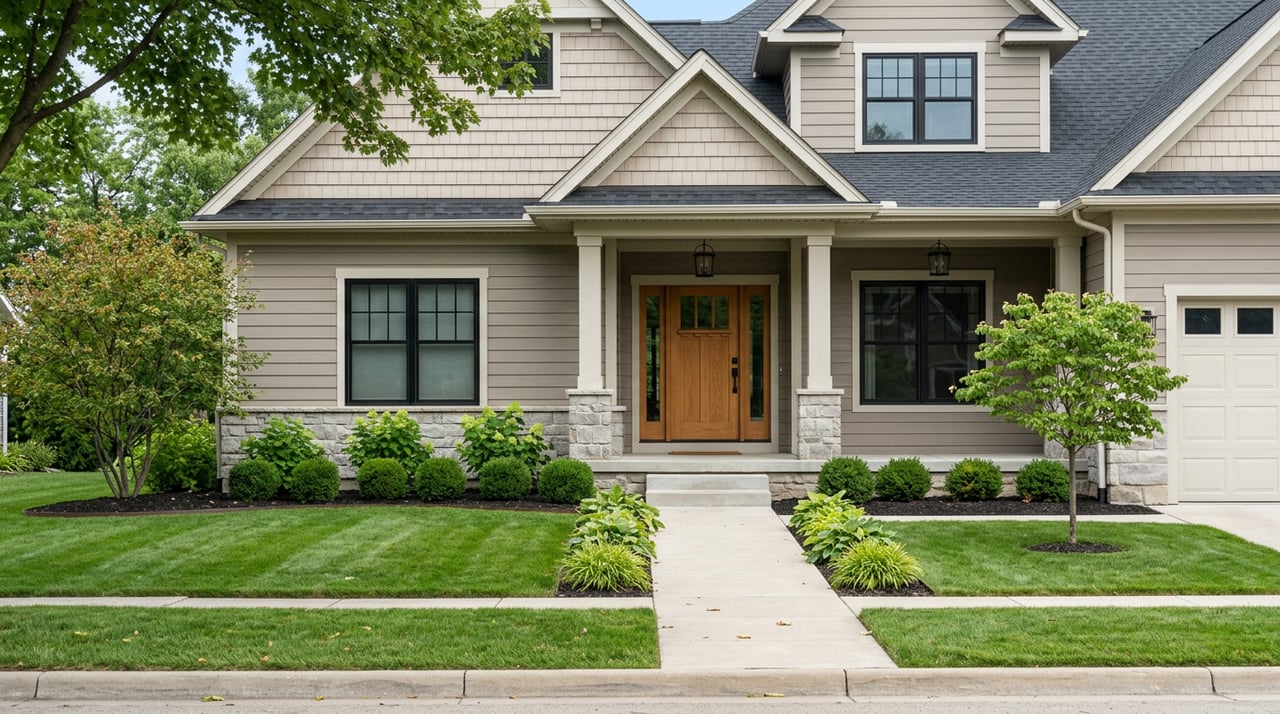
You’ll find a mix of established single‑family neighborhoods, newer infill homes, townhomes and condos, and several modern apartment communities close to major employers. Recent multi‑family projects cluster near Summit Park and along the Reed‑Hartman and Kenwood corridors, which puts restaurants, trails, and events within a short walk or drive (Summit Park).
For context, the five‑year American Community Survey shows a median value of owner‑occupied homes around $403,200 in Blue Ash. That is a city‑level estimate you can use as a baseline across the region (Census QuickFacts). Consumer market snapshots also show a higher short‑term estimate for Blue Ash’s home‑value index near $431,247 as of January 2026. Actual asking prices vary widely by neighborhood, lot size, and proximity to job centers and parks.
On the rental side, published averages often land in the roughly $1,800 to $2,200 range depending on building age, amenities, and unit size. You will see older, smaller rentals below that and newer, amenity‑rich apartments above it. Because inventory shifts month to month, confirm current rates for your target move date.
If you are new to the region, one practical approach is to rent for 3 to 12 months. That gives you time to learn commute patterns, explore submarkets, and verify any school assignments before you buy.
Most Blue Ash addresses are served by Sycamore Community Schools, which operates multiple elementary schools, an intermediate school, a junior high, and Sycamore High. Always verify a specific property’s school assignment directly with the district before you commit to a home (Sycamore Community Schools).
Summit Park is a 130‑acre anchor with trails, playgrounds, an observation tower, and year‑round programming such as concerts and seasonal activities. It is a central amenity for many residents and a helpful yardstick for location and lifestyle fit during your home search (Summit Park features).
For healthcare access, TriHealth Bethesda North Hospital on Montgomery Road is a nearby full‑service hospital campus for emergency and specialty care. Many residents value having a major medical center within a short drive of Blue Ash job centers (Bethesda North Hospital).
Blue Ash also has UC Blue Ash, a regional campus that adds a local higher‑education presence and community programming. It is a useful resource for continuing education and recruiting if your household needs flexible options close to home (UC Blue Ash).
Use this simple plan to shorten your learning curve and avoid surprises:
You deserve clear data and a smooth process when the clock is ticking on a job move. As a boutique team backed by Coldwell Banker, we combine local market knowledge with a project‑managed approach that keeps your timeline on track. We help you:
When you are ready, connect with us for tailored guidance and a clear next step. Schedule your move plan with Luther Group Real Estate.
Stay up to date on the latest real estate trends.



We pride ourselves in providing personalized solutions that bring our clients closer to their dream properties and enhance their long-term wealth.
LUTHER GROUP REAL ESTATE
9321 Montgomery Road Cincinnati OH 45242 Coldwell Banker Realty